
Is Fall Turkey Hunting a Thing of the Past?
By Larry Case
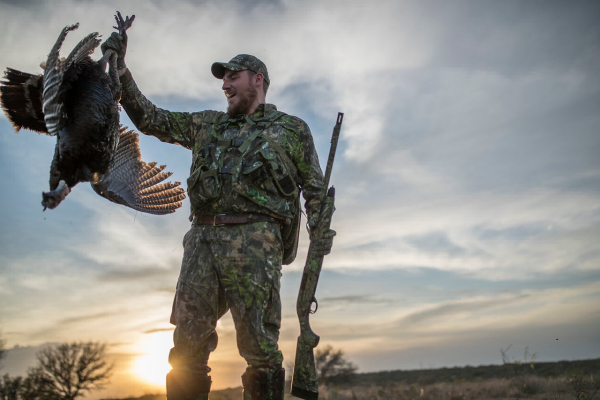
I'm a fall turkey hunter. You don't hear that much these days. Turkey hunting is prevalent; you hear a lot about shotguns and loads, TSS shells, what camo to wear, and calls to use and tactics, but it's all for spring hunting. You will probably hear more about the best caliber to hunt Kudu than you will about fall turkey hunting in the outdoor media. That is a little peculiar to me.
One Bird Two Seasons. The revival of the American Wild Turkey may be the most famous wildlife conservation success story of our time. In the late 1880s and early 1900s, widespread habitat destruction occurred when much of the timber was cut in the eastern United States, this along with unrestricted hunting caused the turkey numbers to plummet, some thought we might lose the wild turkey altogether. By the 1930's wild turkey populations were at their lowest levels, but fortunately, wildlife conservation efforts were starting to happen. In 1937 the Federal Aid in Wildlife Restoration Act (Pittman-Robertson Act) was passed, which provided a way to fund full-scale wildlife management programs. By the 1950s, wildlife biologists worked to increase turkey populations, mainly through trap and transplant programs, trapping wild birds in one area and relocating to another. The various state DNR agencies and groups like the National Wild Turkey Federation, made all this happen.
Through all of this, the wild turkeys' isolated pockets remained, many of them in the Appalachian Mountain range. Even during lean times, people were hunting turkeys in the fall and winter. The fall hunt has a much older heritage than the spring. As the population of wild turkeys began to increase, several states began to consider spring seasons, many of them started in the 1960s. There was more or less a population explosion for turkeys in much of the southeast in the 1980s and '90s. Sportspeople began to take notice of this, and the spring hunt became very popular. How-to videos on turkey hunting sold like hot cakes as a new group of hunters were learning to turkey hunt. Turkey calls, new forms of camouflage, and new shotgun loads for turkeys became hot items. The spring gobbler hunt was booming, and the fall hunt was getting left in the dust.
It's too easy. If you are not familiar with fall turkey hunting, you must remember it is an entirely different kind of hunt from the spring. The basic premise of the spring hunt is it happens during the mating season for turkeys. The male turkey gobbles to attract and locate available hens. The hens do a lot of calling (yelping) to meet with the gobbler. Taking advantage of this, the hunter positions himself and uses the hen turkey's call to attract the gobbler. In most states, only bearded turkeys, the gobbler, is legal to take during the spring. Bearded hens do occur, and they are usually legal as well. (Check your local regulations.)
As to the popularity of the spring hunt, I believe there are two main factors. One is that during times of a lot of turkey activity, that is a lot of gobbling, there is no doubt it can be exciting. Many spring turkey hunters will tell you why they hunt and hear the loud gobbling of a wild turkey. Sitting and calling, watching a gobbler approach in full strut, gobbling all the way, maybe one of the most exciting scenarios in all of hunting. This is what turns the crank of most spring hunters.
The second reason for the spring hunt's fame is it's the only game in town at this time of the year. In the fall, hunters can be distracted by several other hunting seasons, mainly bow hunting for deer, which has been extremely popular for a long time. In the spring, it is usually turkeys or nothing.
The fall hunt could be described as more subdued, although turkey hunting icon Tom Kelly once labeled it as "lively." The fall hunt's essence lies in finding a flock of turkeys, flushing, or scattering them, and then calling turkeys back within shotgun range. This premise may seem strange to the uninitiated, but just finding a flock of turkeys in large tracts of land can sometimes be a task. If they are located, getting in a gun range can be next to impossible, but if the hunter can get the flock separated, he stands a good chance of calling a turkey into range.
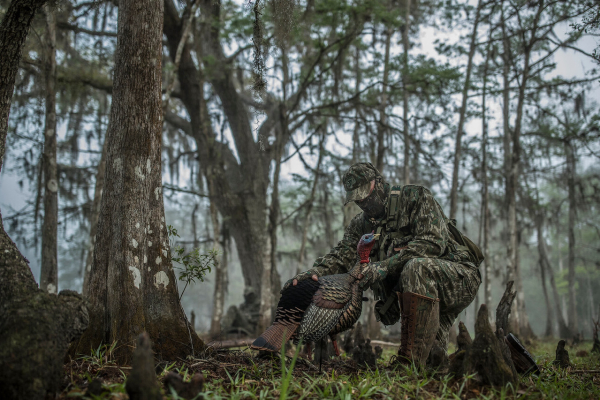
While the advantage the hunter uses in the spring hunt is the gobbler's desire to mate, the fall hunter uses the turkey's longing to regroup, to get back together. Turkeys are gregarious, the flock that is made up of a hen, and the brood she has raised will want to call and find each other. A flock of mature gobblers in the fall will want to regroup as well, they may take a lot longer than a flock of young birds, but they will eventually come together. Young turkeys may do a lot of calling during this process, and old turkeys may call very little but sometimes will surprise you and do a lot of calling.
A common complaint of spring hunters is that in the fall, it is "too easy." They are sometimes referring to the trait of a group of young turkeys after being separated, to call very quickly, and come running into the hunter's call. While this can happen, it certainly doesn't happen all the time. I have seen flocks of young turkeys call very little or no call for hours, only the turkeys know why they do this. The experienced fall hunter may counter this complaint on fall hunting by saying what about the occasional spring gobbler running to the first call from the hunter. Most turkey encounters, spring, and fall are all a little different.
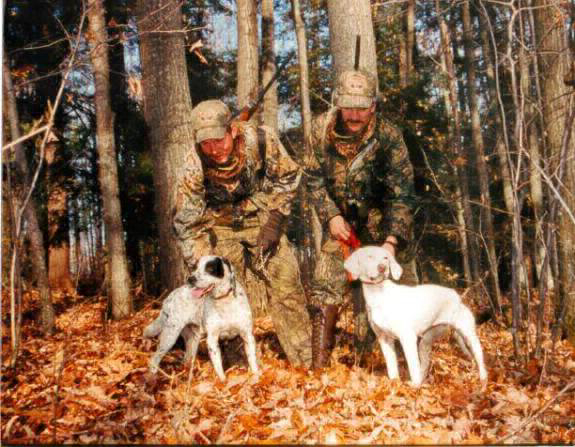
The dogs of fall. One aspect of fall hunting you may not have heard of is dogs' use to find and flush the turkeys. This is an old tradition of fall hunting that started in eastern Virginia and still has a little bit of a stronghold there. Turkey dogs are usually a mix of some of the pointing bird dog breeds, typically pointer and setter, and they are used much like a wide-ranging bird dog. These dogs run ahead of the hunter, find a flock of turkeys and scatter them to the four winds, barking as they fly. The hunter locates the flush site, builds a quick blind, and attempts to call turkeys back to him, and often the dog sits quietly in the blind with him.
Different but the same. While spring and fall turkey seasons have a lot of differences, there are some similarities. Both can consist of long periods sitting quietly in the woods and calling for turkeys. This is something that spring and fall hunters can agree that they like to do; it is one of the essential ingredients of any turkey hunt. Some spring hunters will say they don't hunt in the fall because turkeys don't gobble at this time of year. Turkeys do gobble in the fall and may gobble a lot in getting regrouped, not as much as in the spring right, but they will gobble.
Will fall hunting become a thing of the past? I sure hope not. Fall hunting addicts like me worry about this sport's future, but in truth, several states have instituted fall seasons in recent years. When turkey populations decline, as they are in some areas of the country, the fall season is usually the first thing to be restricted. In the end, I am not trying to convince others to take up fall turkey hunting. Maybe inform and educate some of us about this little-known part of our wealth of hunting opportunities and heritage.