By Bret Collier - Associate Professor
Louisiana State University - School of Renewable Natural Resources
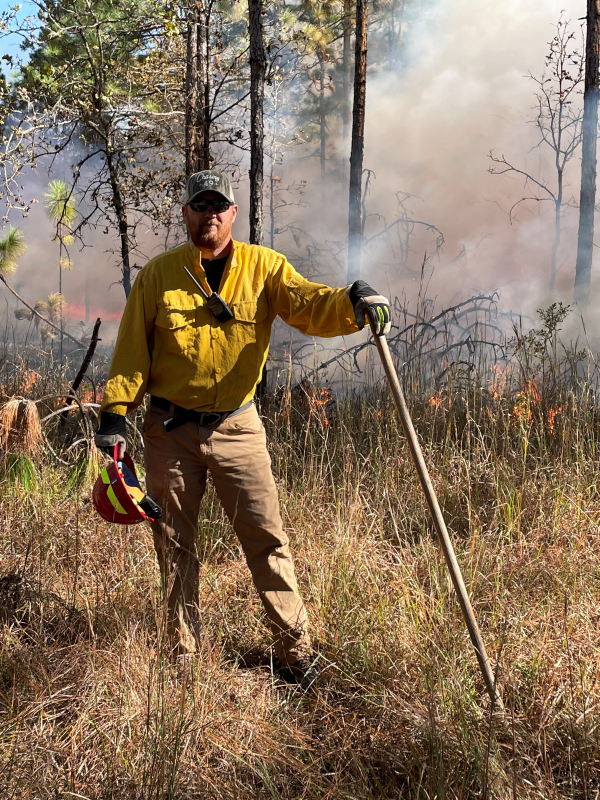
The outdoor recreationalist constituency that we are all a part of has long relied on science as the backbone of wildlife management and policy decisions. Decisions supporting wildlife conservation and management hinge on science, and under the North American Model of Wildlife Conservation, science is the tool used to ensure that wildlife resource policy decisions are made objectively and fairly. The linchpin on which decisions are based, however, is data, and scientific data, when aggregated and interpreted by professional biologists, is and has been the driving force for change in management decisions. As all of us have seen the results of data-based decisions, I thought I would write a little bit about how scientific data comes about. I will note that scientific data is an enormous topic and can be subject to a wide swath of opinion on what data are, or are not, useful when it comes to making a decision. My focus, professionally, has always been on data needed by a specific policy maker (usually a state or federal wildlife agency) but I will give a bit broader of a perspective today.
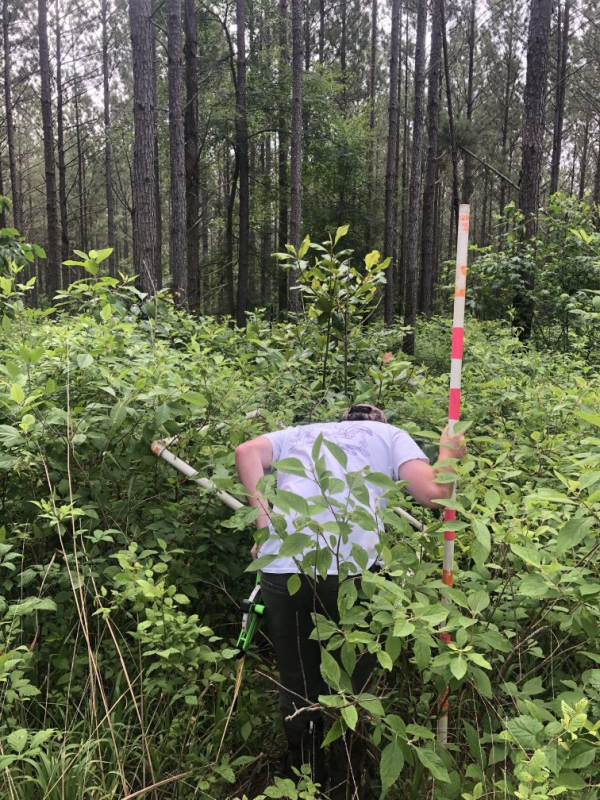
First, let’s be honest. As a professor I do not get to collect scientific data very often anymore. I say that being somewhat jaded as when I got into the field of wildlife biology, I thought what better way to be able to tinker with wildlife all day (and not have to ride a desk) than being a wildlife professor out in the woods jumping on stuff. Unfortunately, expectation and realism collided about the day that I added the -Doctor- moniker to my signature line (so much so that grandfather asked why I needed a PhD since he had already trained me in post-hole digging as a kid on the farm), and now my day-to-day activities are more focused on designing and ensuring smooth implementation of scientific data collection, as opposed to collecting it myself. The real workhorses of data collection in a university setting are graduate students, who spend countless hours catching, tagging, tracking and measuring anything and everything that one would what to know about a critter, even if it involves climbing into a blackberry bush. So, if you every really want to know what a critter is doing, just ask a graduate student (but don’t ask them during hunting season!)
The collection of scientific data has come a long way since I entered this profession. Originally, for me at least, data collection often consisted of long days in the field, trapping and tracking individuals and writing copious notes on a data sheet or a notebook that I would transcribe every night into a spreadsheet that detailed what each critter I found every day was doing and where it was at. For example, being a professional turkey biologist, I can remember the first tag I put on a turkey, it was a small rectangular box with a antenna sticking out of it and was called a Very High Frequency (VHF) tag. The VHF tag emitted a beep every second or so and we used a radio to listen for the beep and we would track to about a quarter mile away and walk (or drive) a circle around it and estimate where it was standing-we were usually accurate to an area of about 70 acres.
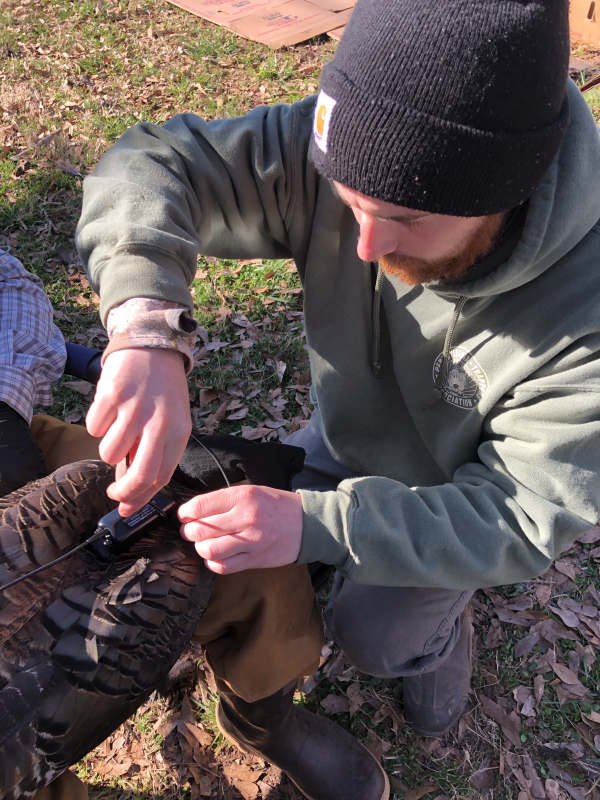
Nowadays, my graduate students used a super light GPS (Global Positioning System) tag on turkeys that we can program to collect time-specific location whenever we want to get data and the locations are so accurate we can tell you what tree the turkey was sitting under and whether it was on the left or right side. Where I used to get 1 location every 3-4 days on a turkey using VHF, with GPS we now get locations every hour or every 30 minutes over the entire course of the reproductive and hunting seasons, so we can even tell you how a male turkey responds to hunter disturbing it (more on this in a future article!).
Probably the most widespread approach used by the greatest number of people collecting data on wildlife is to collect information autonomously using some sort of stationary equipment we put out in the woods. While many of you will be familiar digital trail cameras as they are ubiquitous in wildlife biology, you may not be familiar with programs such as the eMammal project (https://emammal.si.edu/) which scientists use for categorizing all the photographs from digital trail camera projects across the globe. Similarly, wildlife biologists are continually counting and categorizing wildlife based on sounds, such as bird songs or calls. The Macaulay Library (https://www.macaulaylibrary.org/) at the Cornell Lab of Ornithology probably has the most detailed sound records on avian calls in the world, and many of these calls are gathered using automatic recording units (ARUs) which are nothing more than digital tape recorders that scientists place out in nature to record ambient sound each day.
The best part about GPS data collection I mentioned earlier is that it has allowed scientists the opportunity to submit their geospatial data to a central repository called MOVEBANK (https://www.movebank.org/cms/movebank-main) which people can use to explore the huge amounts of data that have been collected as part of scientific research and monitoring efforts all across the world. The ability to use data and scientific results for decision and policy making purposes is one of the predominate goals of the North American Model of Wildlife Conservation, and the public having access to look at and evaluate the data that goes into the decision process represents an important step in ensuring that everyone is aware of what information is being used during the policy process. I am certain that as science continues to progress, we scientists will continue to get better at providing information on data to our stakeholders.
I would be remiss not to note that when hunters hit the woods every year, they immediately become part of the scientific data collection machine that state and federal agencies use to manage hunting activities. Information gathered from hunters, such as number of days hunted, how many individuals seen or heard, whether and when a hunter harvested an animal represents a significant data source used by state wildlife agency biologists to inform and adjust wildlife policy. The Harvest Information Program (HIP) survey we each do when purchasing our hunting licenses each year provides the USFWS with invaluable data on hunting activity that is used to support hunting season structure and timing for migratory game birds. Data on harvested individuals helps to separate the biological signals from the noise, and for many states, harvest information has often been collected for decades and is of great use in providing insight into basic information on harvests at the county, regional and state level. Additionally, as programs such as online check have been used with much success by many states across the U.S., managers are able to continually monitor hunter activity and harvests during the season in almost real time, watching how day to day changes in things like environment can impact hunting activity and harvest.
I want to end with a final and important note. Scientific data collection is driven by a huge host of professional biologists, that include state and federal agency biologists, non-governmental organizations, University students, and in some cases the public. All data collected plays a valuable role in supporting wildlife conservation, whether it is data from a GPS tag on an animal, or a electronic survey sent from a state wildlife agency interested in hunter opinions and preferences, so if you every get the opportunity to provide data supporting wildlife conservation, please do so, as the benefits will be wide-ranging and far-reaching.
As always, I hope that if anyone ever has any questions, or topics they might be interested in hearing about, please feel free to contact me.
\bret
You can contact Dr. Bret Collier at:
bret@lsu.edu, or via social media;
Twitter: @drshortspur
Instagram: @drshortspur