
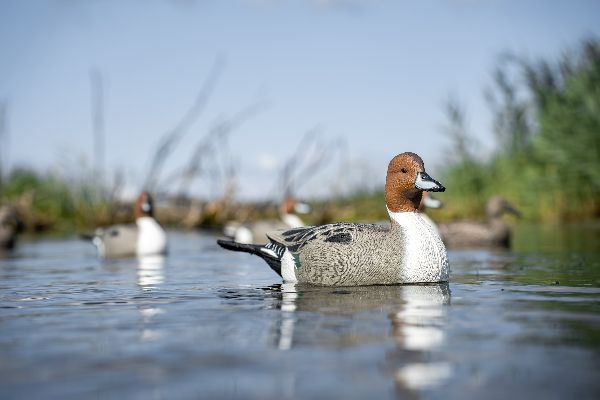
There's a moment every pintail hunter knows. The bird's down, the retrieve is made, and for a second before it goes in the bag, you just look at it. The chocolate head. The white stripe cutting up the neck like it was painted by God himself. That long, needle-thin tail lying against the water. It doesn't look like something that belongs in a cooler. It looks like a trophy that belongs in a museum of natural history.
That's the pull of a pintail. Other ducks get shot and stacked. Part of the difference comes from the challenge — pintails are wary, fast, and quick to flare, so fooling one still means something. But part of it is simpler than that. They're just one of the best-looking birds in the sky.
Where the Birds Stand
The 2026 U.S. Fish and Wildlife Service Waterfowl Population Status Report gave pintail hunters something to feel good about. The breeding population came in at 2.24 million birds, up 13 percent from the year before and one of the few bright spots in a survey that was flat or down for several other species. Pintails are still well below their long-term average, a gap the species has carried for decades, but the direction this year was the right one.
Range, Routes, and Timing
Pintails show up early and they show up wide. Few ducks cover as much ground each fall, and few give hunters as many looks across as many different types of water. The Pacific and Central Flyways carry the bulk of the migration, funneling birds down through the prairies, the Dakotas, and eventually into California's Central Valley, the Gulf Coast, and the rice country of Texas and Louisiana, though hunters in every flyway cross paths with them at some point in the season.
Timing is what sets pintails apart. They're among the first ducks to move each fall, often pushing south well ahead of the main flight and well before mallards show up in numbers. For hunters who chase that early window, on freshly flooded fields, shallow marsh, or the first cold front of the year, pintails are often the headline bird before the rest of the season gets going. That early arrival also means an early exit for some birds, as pintails don't linger the way mallards do once temperatures really drop, which is exactly why hunters who want a crack at a big drake sprig learn to move fast when that first push comes through.
A Reputation at the Table
Pintails have earned their reputation at the table just as much as in the blind. Hunters and food writers alike consistently rank them among the best-eating ducks in North America, often mentioned in the same breath as mallards, canvasbacks, and teal. The meat is milder and more tender than a mallard's, with white fat instead of yellow, giving it a cleaner, more delicate flavor. Like most puddle ducks, that flavor shifts with diet. Grain-fed birds off the prairies and Central Flyway are prized on the table, while late-season coastal pintails picking at shellfish can pick up a stronger flavor closer to a sea duck.
That status creates a genuine dilemma once a big, well-colored drake hits the deck. Every pintail hunter knows the moment. A meaty mallard goes straight to the strap without a second thought, but a mature drake pintail in full pageantry gives a hunter pause. Does it go to the table, or does it go to the taxidermist? There's no wrong answer, and plenty of hunters have made both calls on birds from the same season.
Of course, none of that matters until you get one in range. Pintails don't hand out that decision easily. Getting a wary, well-traveled drake to commit to a spread is the hard part, and it starts with decoys that don't give the game away before the shot ever happens.
Built for a Bird That Doesn't Forgive Mistakes
A wary bird demands a decoy that doesn't give itself away, and that's exactly what Hardcore built with the Rugged Series Pintails. These aren't decoys pulled off a generic mold and painted to match. Every detail was built specifically around this species, from the tapered profile down to the paint on the tail feather. The set is designed to survive a full season of hard use as well, without losing the realism that makes it worth hunting in the first place. It looks as good sitting in a garage as it does working a spread.
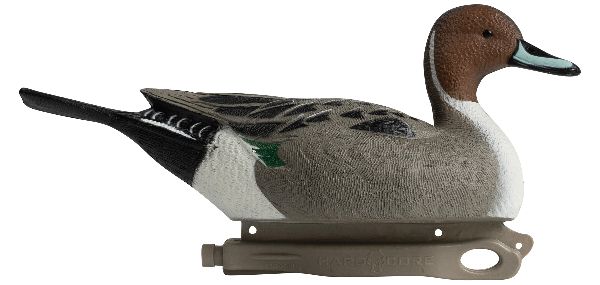
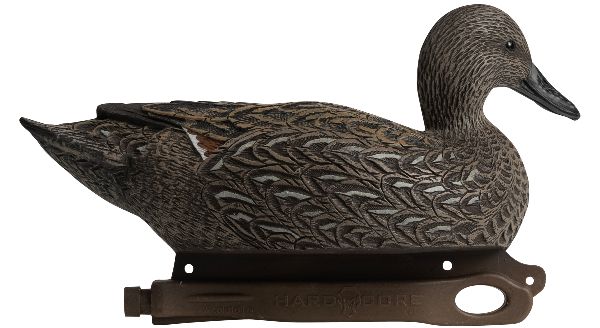
Here's a closer look at what makes it work.
Ultra-Durable FowlFlex™ Technology
Waterfowl season doesn't go easy on gear. There's mud, freezing water, boat rides, and decoy bags getting tossed into truck beds and boat blinds before daylight even breaks. Hardcore engineered FowlFlex™ for exactly that kind of abuse.
Rather than relying on brittle, rigid plastics that shatter under impact or crack when the mercury plunges, FowlFlex utilizes an ultra-durable, elastomeric compound with a calculated softness. It delivers deliberate give, which lets the decoy body flex under pressure, absorb crushing weight, and rebound immediately back to its true anatomical shape. That engineered compliance prevents stress fractures and keeps seams intact without turning the decoy into a soft, mushy mess. The result is a decoy that bends without breaking, absorbs the worst punishment of late-season hunts, and ensures the six-pack you throw in the spread this year is still riding the chop seasons from now.
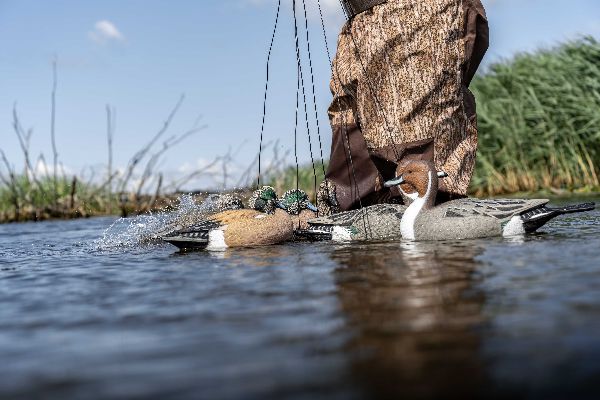
True-To-Life Drake and Hen Paint Schemes
Hardcore didn't cut corners on the paint, either. The chocolate-brown head fades into that crisp white stripe with real precision, and the fine vermiculation across the back gives each bird depth instead of a flat coat of color. The body matches that same attention, too, sculpted with the long, lean lines that make a live pintail unmistakable on the wing.
It's the kind of detail a bird this wary needs to see from three hundred feet up. Pintails have likely circled a few decoy spreads by the time they reach yours, and this decoy is built to hold up under that kind of scrutiny.
"Pintails don't give you many second chances," said Doug Veldhuizen, Merchandise Manager for Hardcore Waterfowl. "They're just a wary bird by nature, and plenty of them have already seen a decoy spread or two. We put a lot of work into getting the paint accurate on both the drakes and hens because that's what makes the difference on a bird this smart."
WhaleTail™ Keel Creates Lifelike Movement With Little Current
A decoy that just sits there dead in the water gives itself away fast, especially to a bird as cautious as a pintail. The WhaleTail™ Keel solves that by generating natural, lifelike movement off almost nothing. A light breeze or a faint current is enough. That subtle motion is often the difference between a spread that looks like a photograph and one that looks dynamic.
The 6-pack includes four drakes and two hens, giving hunters a realistic mix to work with straight out of the box.
"This is a bird hunters go out of their way to target," Veldhuizen said. "We wanted a decoy that matched that effort, something durable enough to hunt hard and detailed enough to actually fool them."
A Trophy Worth the Extra Effort
Pintails have always asked more of the hunters chasing them. More patience, more precision, more respect for a bird that doesn't tolerate mistakes. The Rugged Series Pintails were built for that exact pursuit. They're tough enough to hold up all season and detailed enough to earn a second look from a bird that rarely gives one.
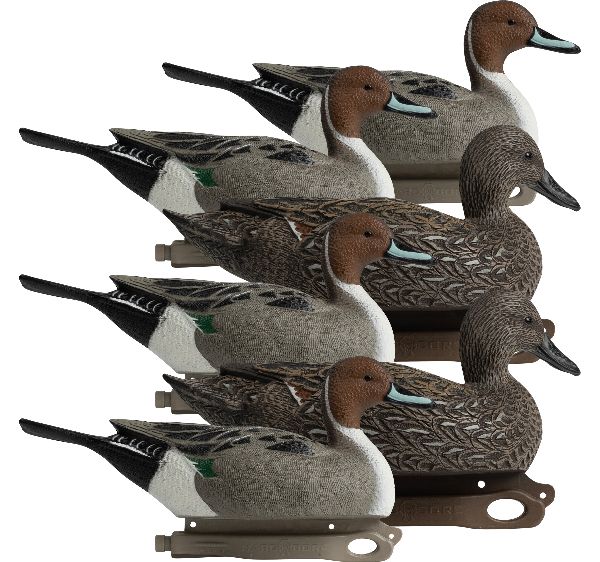
RUGGED SERIES PINTAILS FEATURES:
- Hardcore's Ultra-Durable FowlFlex™ Technology
- True-To-Life Drake and Hen Paint Schemes
- WhaleTail™ Keel Creates Lifelike Movement With Little Current
- 6-Pack Includes: 4 Drakes & 2 Hens
- MEASUREMENTS: 17.5" L x 6.5" W
MSRP $99.99