
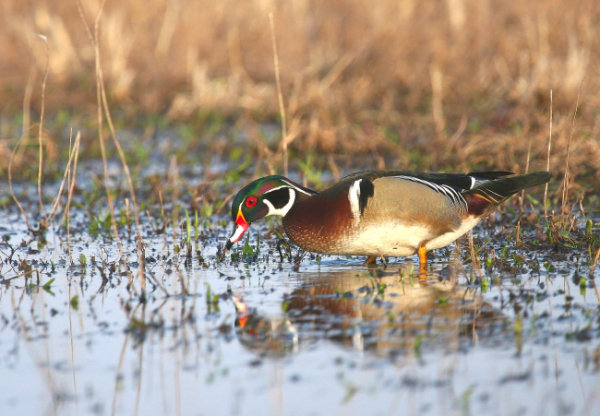
 Being a puddle duck, wood ducks primarily feed in shallow water on seeds, insects, and acorns. Photo by Clayton Ferrell/USFWS |
Highly pathogenic avian influenza (HPAI) viruses can severely affect domestic animal, wildlife, and sometimes human health.
Outbreaks of Eurasian lineage highly pathogenic avian influenza viruses have been impacting domestic poultry and wild bird populations in Europe and Asia since August 2020. Introduction of the Eurasian lineage HPAI to North America occurred in late 2021, at least two additional virus introductions have occurred since then.
HPAI cases have now been confirmed in both domestic and wild birds in numerous locations throughout Canada and the United States. The strain of HPAI now present in North America has caused extensive morbidity and mortality events in a range of wild bird species, similar to that seen in Europe and Asia.
What’s being done?
Because both trade in HPAI-infected poultry products and wild bird migration likely contribute to the local and long-distance spread of HPAI viruses, proactive measures to detect and limit the potential for of virus introduction and spread in all sectors are imperative.
The Interagency Steering Committee for Avian Influenza Surveillance in Wild Migratory Birds, currently chaired by the U.S. Fish and Wildlife Service, has increased avian influenza surveillance of wild birds across the country.
Key elements in effective surveillance include early detection, rapid communications, quick and accurate laboratory diagnosis, relay of diagnostic findings back to the field, to decision makers, and the public, as well as implementation of prevention and management actions where necessary.
U.S. Fish and Wildlife Service responsibilities
The Service is responsible for the following efforts on Service-managed lands and waters:
- Monitoring wild bird populations for the earliest possible detection of HPAI by conducting morbidity and mortality investigations and submitting specimens for laboratory testing.
- Ensuring biosecurity and biosafety on the Service-managed lands and waters to limit spread of the virus.
- At the request of our partners, assisting with the collection of biological samples for testing live and hunter-harvested birds for HPAI.
- In certain situations, refuge managers may choose to limit public access to areas where sick or dead birds are present to protect human and domestic animal health. Please contact the refuge for the latest information.
Ways to help prevent HPAI spread
- Report bird mortalities to your state wildlife management agency immediately so that bird die-offs can be investigated and tested for avian influenza.
- Prevent contact of domestic or captive birds with wild birds.
- Do not handle sick or dead wildlife. If it is necessary to do so, wear impermeable gloves, wash hands with soap and water, and change clothing before having contact with domestic poultry or pet birds.
General safety guidelines for hunters handling wildlife and their tissues
- Do not handle or eat sick game.
- Field dress and prepare game outdoors or in a well-ventilated area.
- Wear rubber or disposable latex gloves while handling and cleaning game.
- When done handling game, wash hands thoroughly with soap or disinfectant, and clean knives, equipment, and surfaces that came in contact with game.
- Do not eat, drink, or smoke while handling animals.
- All game should be thoroughly cooked to an internal temperature of 165 degrees F before being consumed.
Feeding Birds
- Bird feeders are unlikely to result in increased spread of avian influenza since the species of bird that tend to come to feeders are not commonly infected.
- However, feeders do concentrate passerines and increase the risk of transmission of other infectious diseases that do impact their health, including salmonella, E. coli and mycoplasma.
- Creating natural spaces that attract birds to the cover and food provided by native vegetation appropriate to the location is far healthier than feeders.
Additional resources
- What to do if you find a baby bird, injured or orphaned wildlife
- Letter to Native American Tribal Leaders Regarding Avian Influenza
- Migratory Bird Banding Operations and Considerations During Confirmed HPAI Detections
U.S. Department of Agriculture APHIS
- HPAI outbreak updates for the U.S.
- States and Wild Birds with HPAI Detections
- Guidance on Avian Imports
U.S. Geological Survey
Centers for Disease Control and Prevention
Canadian Food Inspection Agency
Information on this page provided by the Wildlife Health Office, part of the Natural Resource Program Center.